
Production practice
Industrial practice is an important part of the training of students at the Higher College of IT and New Technologies. It allows students to apply their theoretical knowledge in practice, develop their professional skills, and prepare for their future careers. The practice is conducted in organizations that match the students’ field of study.
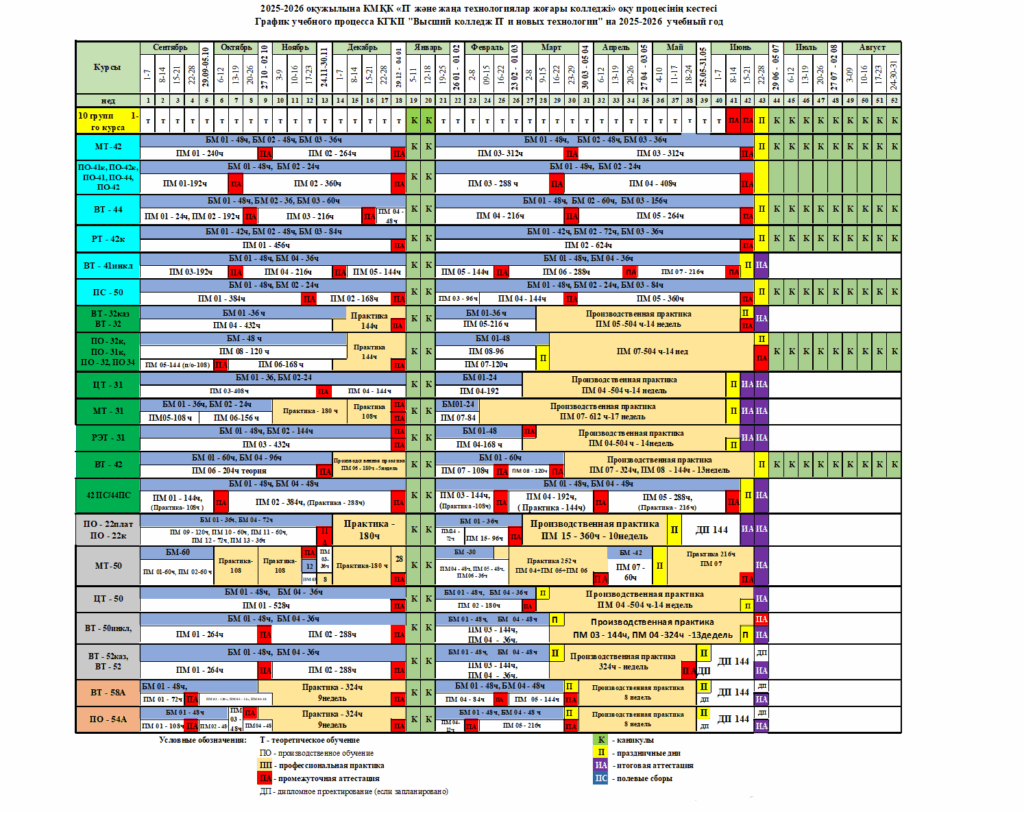
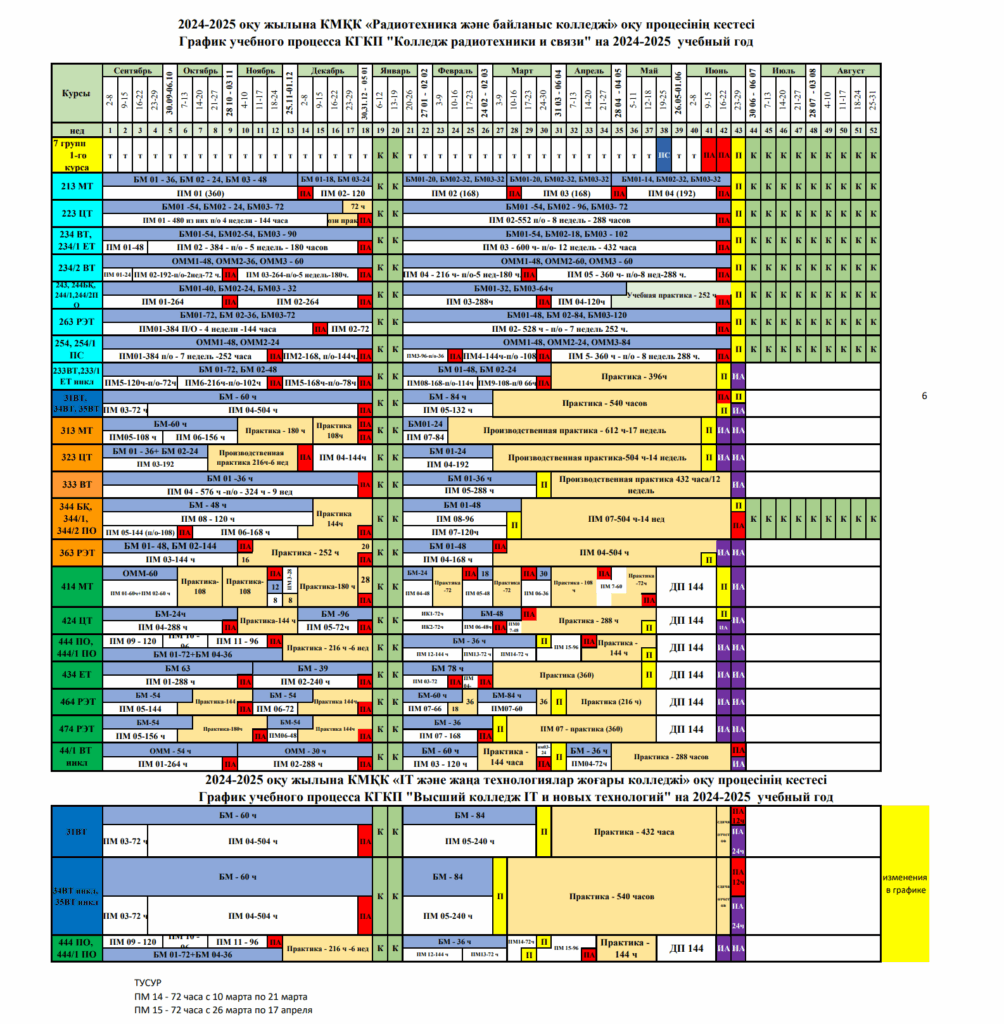
Schedule of the educational process
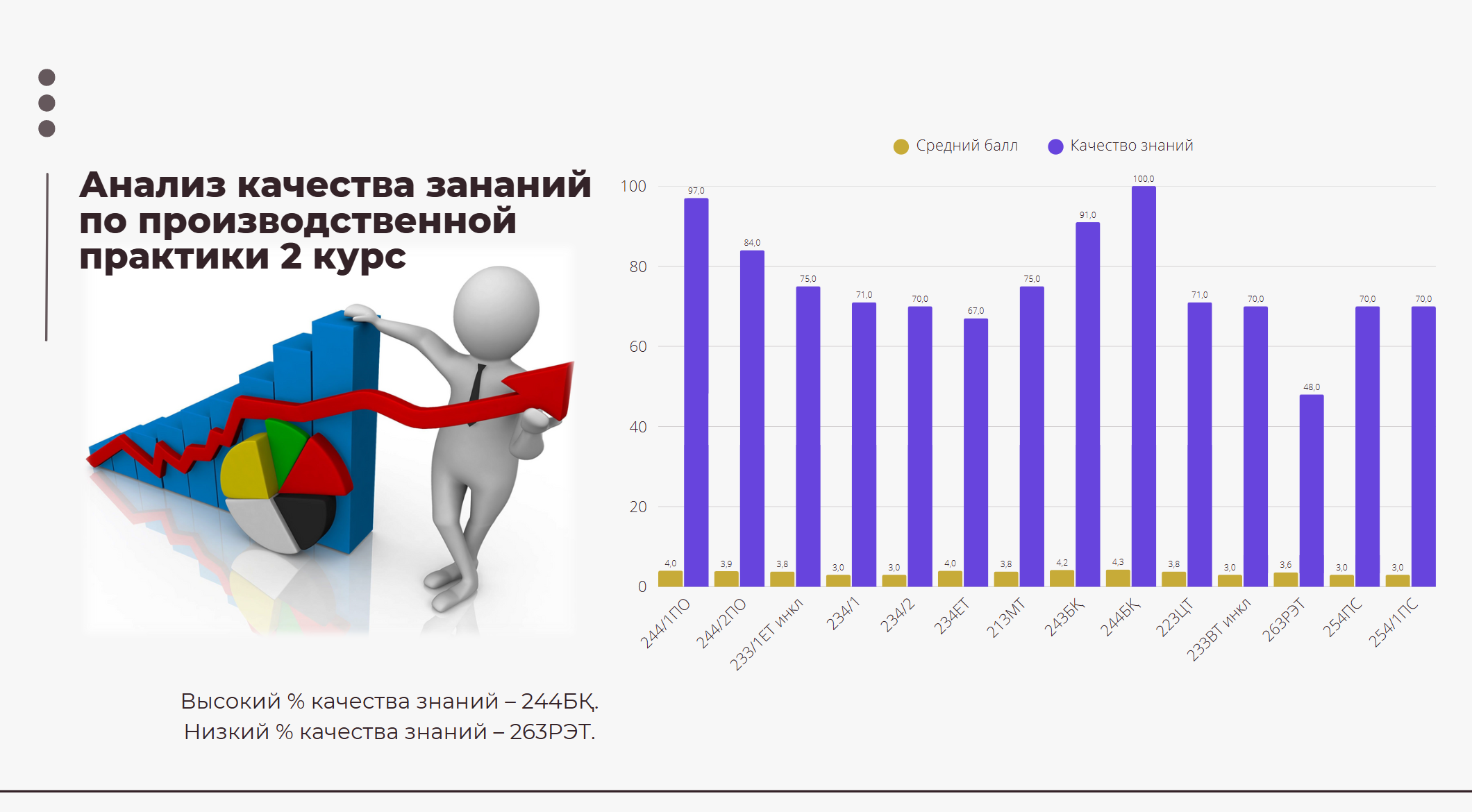
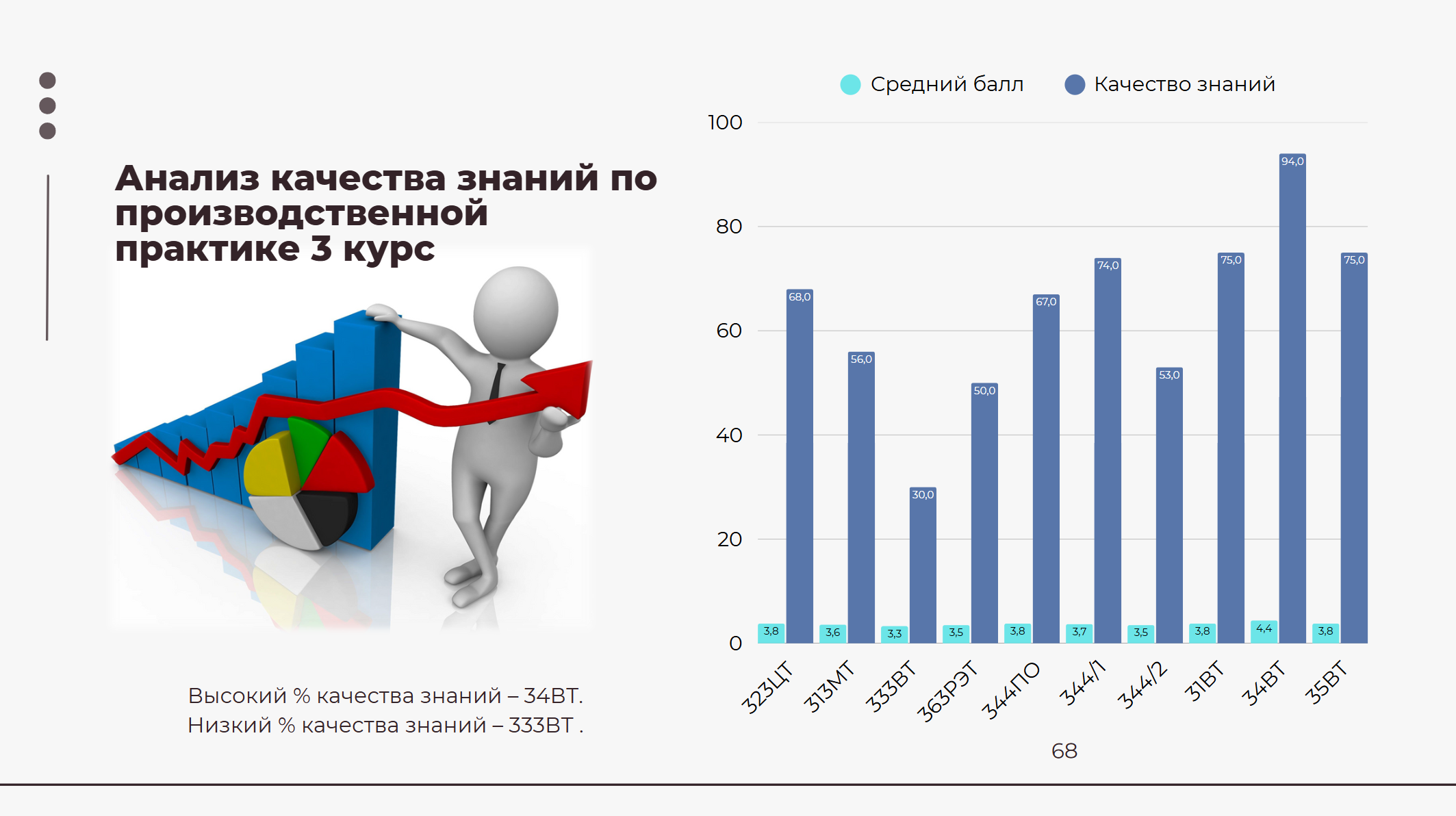
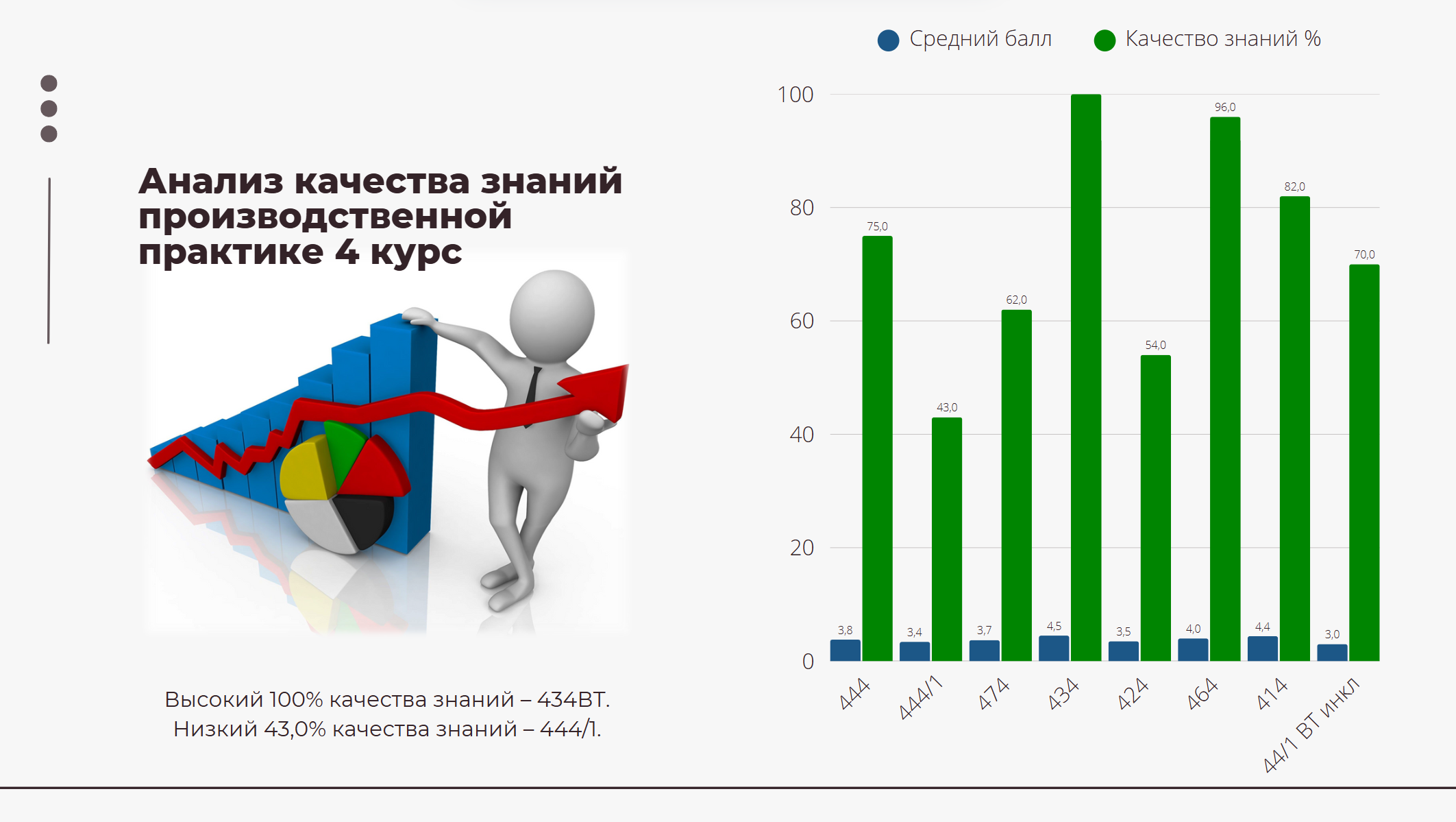
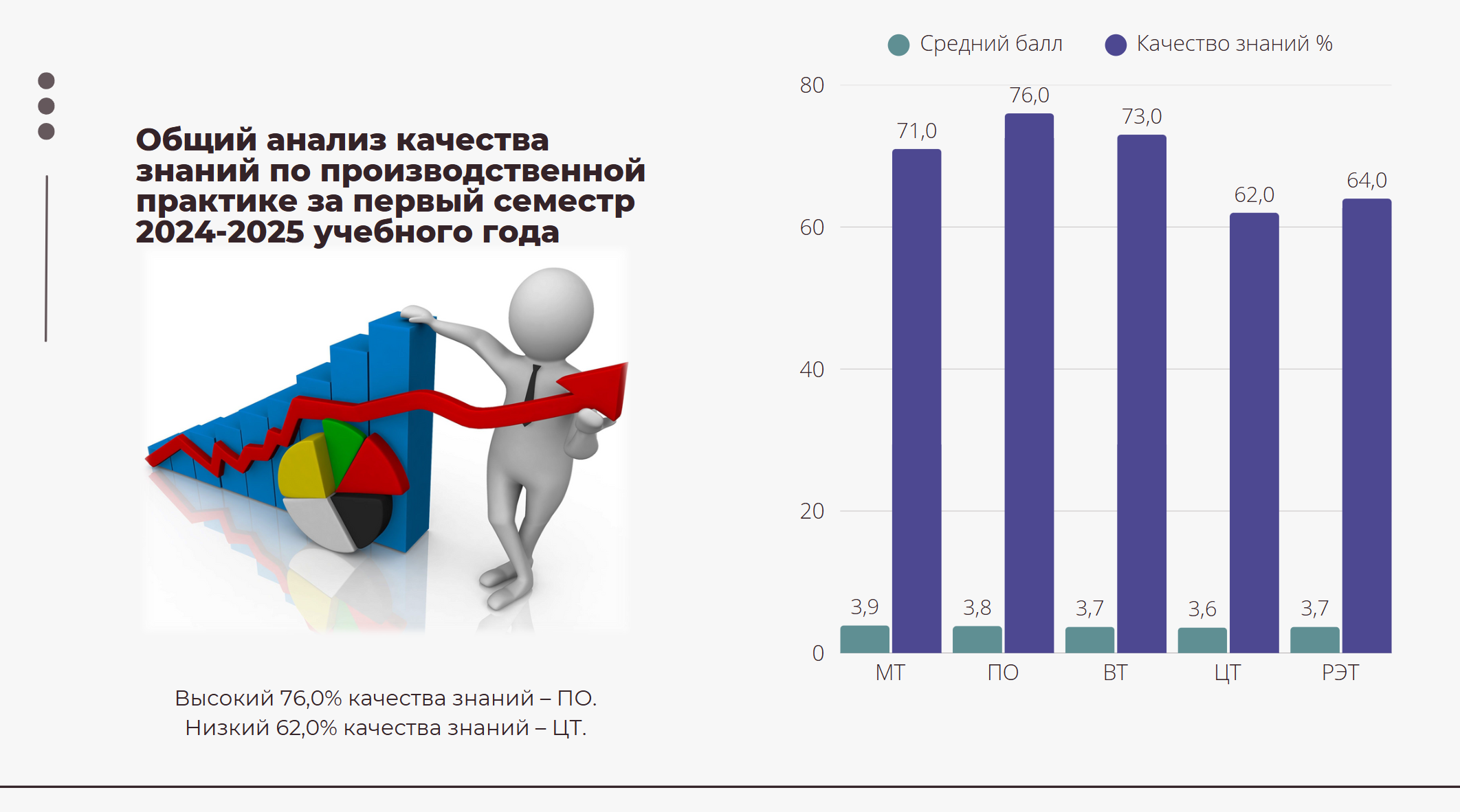
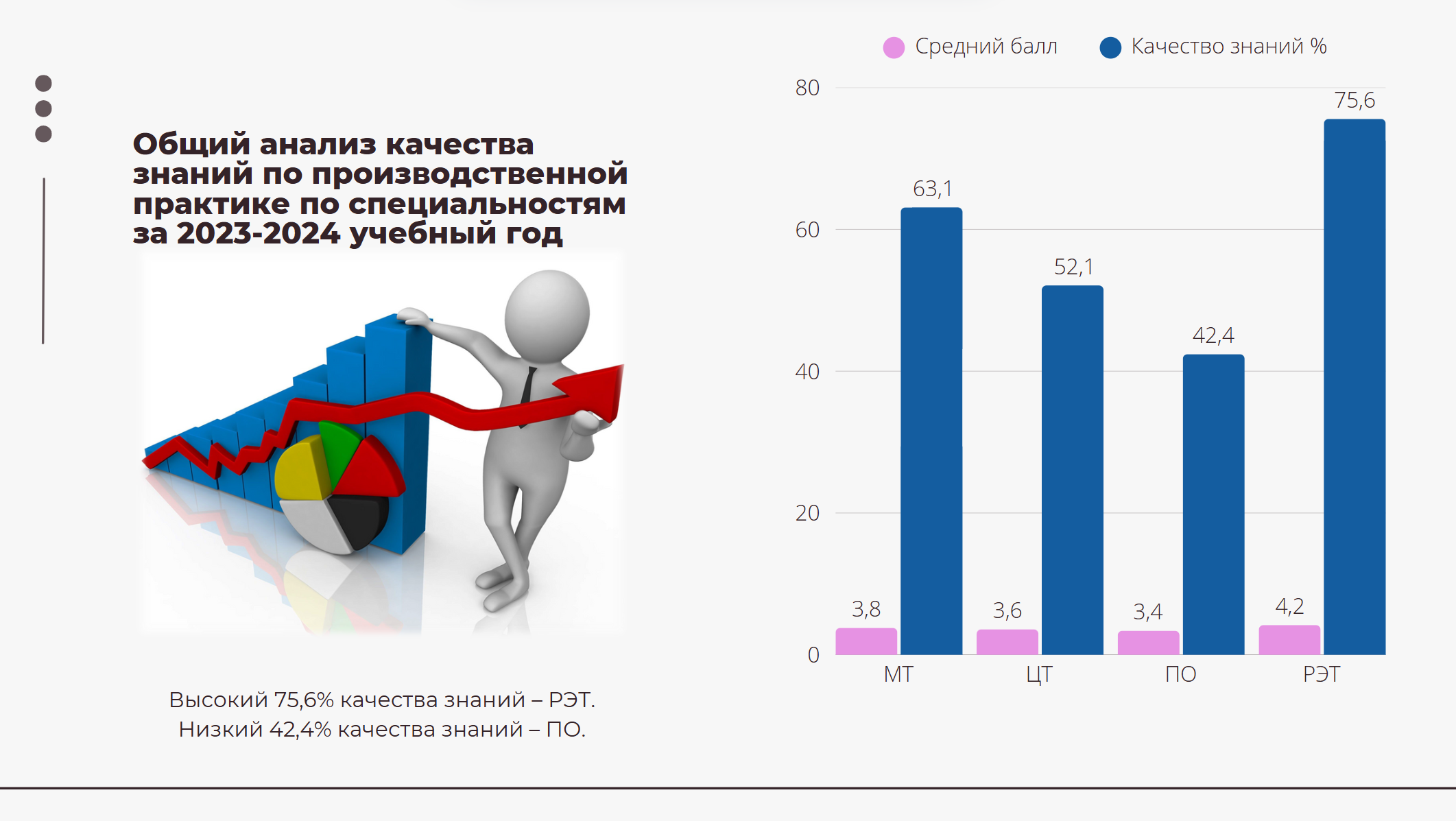
Analysis of the quality of education in production practice in the 2024-2025 academic year
TEACHING METHODS USED
Training methods that meet the requirements of employers and effectively develop students’ professional skills should take into account current trends in the labor market and the needs of the modern professional community. To be successful, training methods should not only provide theoretical knowledge but also develop practical skills, critical thinking, and the ability to adapt to changing work environments.
Here are some key training methods that promote the development of these skills:
- Practice-based learning (Project-based learning)
This method involves students working on specific projects or tasks that they may encounter in their professional careers.
Advantages:
- Students not only acquire theoretical knowledge, but also learn how to apply it in real-life situations.
- They develop their teamwork, project management, and problem-solving skills.
- By involving employers and professionals in the evaluation of student projects, students work on industry-relevant tasks.
2. Simulation of professional activity (Simulation-based learning)
This method involves creating situations where students can practice and make decisions in a safe environment, simulating real-world work conditions.
It could be the following:
- Simulators (e.g., for aviation specialists, healthcare professionals, and engineers).
- Business games where students take on various professional roles (e.g., manager, HR specialist, consultant).
- Role-playing games and case studies where students solve specific problems as if they were working in a company.
Advantages:
- Allows you to develop quick-decision-making, critical-thinking, and uncertainty-handling skills.
- Creates a safe environment for making mistakes, which helps learners to be more confident in real-world work.
3. Integration with production practice (Work-based learning)
This is a method in which students are trained in specific companies, at workplaces. Here, students:
- Performs practical or internship work and carries out specific work tasks.
- Receives mentoring and feedback from experienced professionals.
- Participates in projects related to the company’s development, linking theoretical knowledge with real business needs.
Advantages:
- Students gain experience in specific production environments.
- Communication, teamwork, and adaptation to corporate culture skills are improved.
4. Flexible and adaptive learning (Adaptive learning)
This method involves creating individualized educational paths using technologies that adapt to each student’s level of knowledge and needs.
- The system adapts to how the student is learning and offers additional materials, tests, or assignments to fill in the gaps.
- Using online platforms like Coursera, edX, or corporate learning platforms allows students to explore topics in depth at their own pace.
Advantages:
- Individual student needs are taken into account.
- Students can accelerate or slow down the learning pace depending on their level of knowledge and experience.
- Student motivation is increased because they can complete the program at their own pace.
5. Feedback and mentoring
Constant feedback and mentoring from mentors, practitioners, and employers contribute to the development of critical thinking and professional skills.
- Constant feedback helps students understand their strengths and areas that need improvement.
- Mentoring is an effective way to transfer knowledge and experience from experienced professionals to newcomers.
Advantages:
- Students develop higher self-esteem and self-confidence.
- Helps to build professional connections with future employers.
6. Technologies and innovations in education (e-learning and blended learning)
Online courses, virtual classrooms, videoconferences, and blended learning, where traditional teaching methods are complemented by electronic resources, help develop students’ independence and digital literacy.
Advantages:
- The ability to access resources and courses 24/7.
- Students can learn at their own pace, which allows for better retention of information.
- Online courses and training can be tailored to specific professional standards.
7. Interdisciplinary learning
Training that includes several elements of a discipline broadens students’ horizons and develops their ability to work with information in various fields. For example, an engineer needs not only technical knowledge, but also communication, management, and social and environmental skills.
Advantages:
- Students learn to combine different knowledge and solve complex problems.
- They develop the skills of working in multidisciplinary teams.
- Students become more flexible and creative in solving non-standard problems.
8. Development of Soft skills
In addition to professional knowledge, employers require employees to develop the following soft skills:
- Communication, negotiation, presentation of ideas.
- Leadership, teamwork, conflict resolution.
- Time management, critical thinking, creativity.
Advantages:
- These skills are essential for success in any professional field.
- Learning through role-playing, training, and group projects helps students prepare for various professional situations.
9. Independent study and research work
Methods that encourage independent learning and participation in scientific research:
- Performing individual research projects, preparing term papers and theses.
- Participate in scientific conferences, forums, share experience and present your research.
Advantages:
- It develops the skills of independent work, critical analysis, and independent decision-making.
- An individual approach and innovative solutions form the readiness for a demanded professional activity.
Video materials from practice databases
This section contains video materials that reflect the process of students’ practical training at various enterprises and partner organizations. The video materials clearly demonstrate the real working conditions, the professional activities of students, the acquisition of practical skills, and the application of theoretical knowledge in practice.
These materials allow students to see the features of various professional fields, the use of modern equipment, and the participation of students in production processes and interaction with mentors at enterprises.
The department is constantly updated with new materials as part of the educational process and in accordance with the development of partnerships.
A systematic approach to organizing training and practical experience using digital tools
Ust-Kamenogorsk / workshop
On behalf of the KSCP” higher College of IT and new technologies “we took part in an interregional workshop on the topic” digital educational resources in professional training of competitive personnel”. The event was held on the basis of the higher IT College of the East Kazakhstan Technical University named after D. Serikbayev.
The delegation included:
-deputy director for educational and production work Shalova Farida Kenzhebekovna
– deputy director for IT Cherednichenko Maksudi Vasilyevich
– deputy director for academic work Kairzhanova Yerkezhan Yerzhanovna
– teacher of special disciplines Kasimzhanov Aydin Kundikbaevich
During the plenary session and sectional work, issues of digitalization of education, the development of a digital educational environment, professional development of teachers and the introduction of innovative practices were considered.
Our colleagues made presentations on the following topics:
Kairzhanova Yerkezhan Yerzhanovna – ” innovative practices in education: experience and prospects