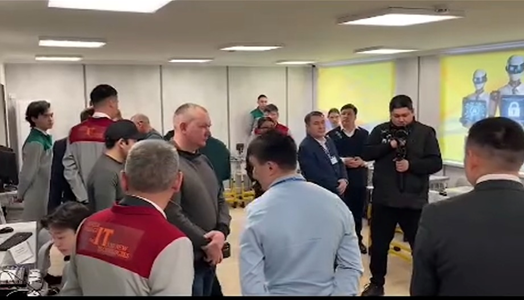
Development of educational programs based on the dual training system Department of Education of Abai Region
KGKU “Higher College of IT and New Technologies” together with employer enterprises
1. Introduction
The development of a dual training system is one of the main priorities in training personnel capable of solving production tasks. The parallel acquisition of theoretical knowledge and practical skills at colleges and enterprises allows students to develop applied skills and quickly adapt to the professional environment. IT colleges are actively implementing modern approaches to training specialists, one of which is dual training, which involves combining theoretical classes at colleges with practical activities at IT companies and enterprises.
2. The purpose of the program
Development of a model for high-quality training of students, taking into account the current needs of employers, where at least 60% of practical skills are formed in specific production conditions.
3. Main tasks
- Involving enterprises in shaping the content of educational programs;
- Strengthening the partnership between the college and industry organizations;
- Reducing the gap between professional standards and curricula;
- Preparing students for specific production functions.
 Formats of cooperation with IT companies:
1. Dual training
Students complete the theoretical part at the college and then consolidate their knowledge at partner companies for 2-3 days.
➤ Example: joint training plans with the participation of employers.
2. Production practice and internships
Internships that are regularly held in IT companies provide students with experience working on specific projects.
➤Example: development of websites and applications, technical support, etc.
3.Mentoring and project work
Business representatives mentor students and support startups and hackathons.
➤ For example: IT company specialists lead student teams, review code, and provide feedback.
4. Joint laboratories and technology parks
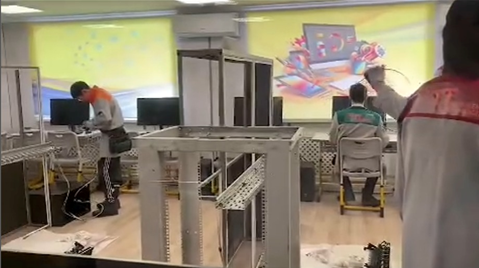
Some colleges, with the support of their partners, have opened modern laboratories on their premises.
➤ Examples: cybersecurity, AR/VR, and robotics labs.
Advantages for students:
- Acquiring work experience during the learning process;
- Familiarization with the requirements of corporate culture and the industry;
- The opportunity to find employment after graduation or during the study period;
- Soft-skills development and teamwork skills.
Advantages for companies:
- Adaptive training of future specialists;
- Reducing the costs of adapting new employees;
- Participation in the formation of educational programs.
4. Areas of dual training and partner organizations
| The direction of training | Partner Company | Type of activity |
| Digital technology | LLP “Shulbinskaya HPP”, LLP “Cement Plant” | Automation, digital control systems, and telemechanics |
| Medical equipment | KGP on PKhV” Polyclinic No. 7 in the City of Semey” | Maintenance and adjustment of medical and diagnostic equipment |
| Postal communication | Kazpost JSC, Semipalatinsk branch | IT support for logistics, sorting, and postal processes |
5. Stages of the program implementation
Stage 1: Preparation and approval
- Signing dual training agreements with organizations;
- Jointly defining the competencies required by employers;
- Distributing the workload and creating a study schedule.
Stage 2: Development of program content
- Adjustment of working curricula to the specific needs of the enterprise;
- Development of joint modules: workshops, laboratory and production assignments;
- Training of mentors from the enterprise.
Stage 3: Training and support
- Sending students on internships and work experience according to the schedule;
- Keeping practice diaries, reports, and photo and video reports;
- Advising students by representatives of enterprises.
Stage 4: Evaluation and Feedback
- Intermediate and final control of knowledge and skills;
- Joint certification of students with the participation of employers;
- Collection of feedback and improvement of the program.
6. Expected results
- Students gain experience in the real workplace;
- Reducing the adaptation period for graduates;
- Increasing the level of employment in the field of study;
- Training specialists in accordance with the requirements of specific industries.
7. Conclusion
The implementation of dual training by the Higher College of IT and New Technologies in cooperation with such enterprises as Shulbinskaya HPP LLP, Kazpost JSC, and Polyclinic No. 7 in Semey is an important step in establishing a strong link between education and production. This is an important area for training modern, competitive personnel who can effectively work in the context of digitalization and the development of the service economy in Kazakhstan.
Information about the events and round tables held on the implementation of dual training
KGKU “Higher College of IT and New Technologies”
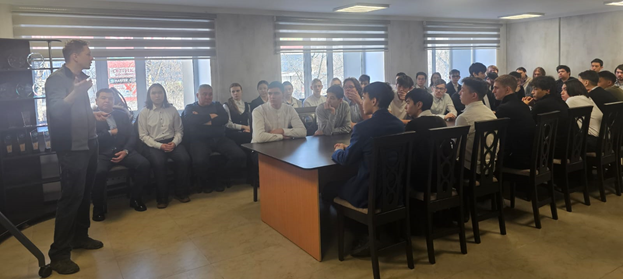
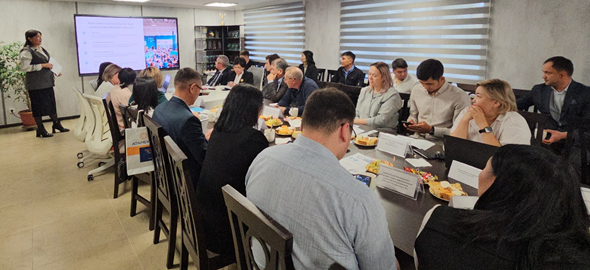
The Higher College of IT and New Technologies is actively involved in the development of dual training in the region, combining theoretical training with practical training at enterprises. On September 27, 2024, a roundtable discussion titled “School-College-Enterprise” was held. During the event, participants discussed the organization of professional orientation for students, the planning of the educational process, the implementation of training and practical exercises, the introduction of dual training, and the employment of students at social partner enterprises.
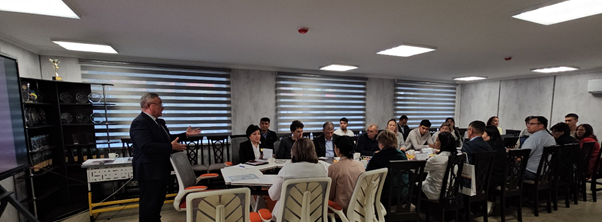
On February 20, the Higher College of IT and New Technologies held a “DemoDay” on dual training.
 The main purpose of the event
Presentation of the results of the implementation of the dual training model at the college.
Strengthening the interaction between the college and partner enterprises.
Raising the awareness of students and teachers about the possibilities of practice-oriented training.
Discussing the challenges and solutions in the process of implementing dual education.
 Participants of the event
Management and teachers of the college
Representatives of the partner companies of the IT industry
Students of dual programs
Representatives of the Education Authority
Guests of other colleges and educational organizations
 The main components of the program
Speeches by representatives of the enterprise
– Examples of real relations with the college
– Assessment of the level of training of students within the dual format
– Presentations by students
– Demonstration of projects completed during the internship
– Reviews on internships and work at enterprises
– Round table
– Discussion of issues:
adaptation of curricula;
motivation of students;
participation of enterprises in the development of programs.
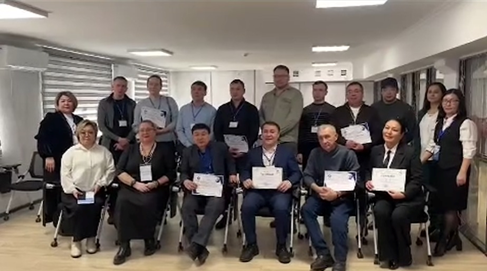
Signing of new memoranda of cooperation
 Results and plans
Increase in the number of partner companies.
Expansion of the list of specialties that offer dual training.
Organization of joint advanced training courses.
Introduction of new digital tools for monitoring and supporting student practice.
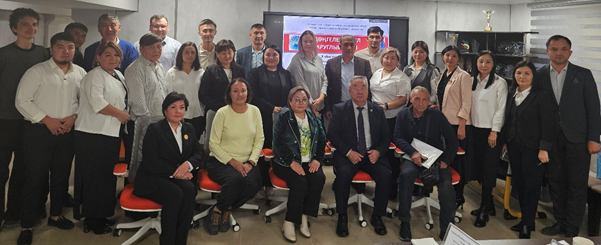
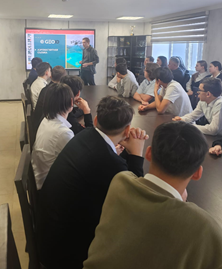
In February 2025, a meeting was held between the graduating students and representatives of the GEO id company.